One place to plan everything, together.
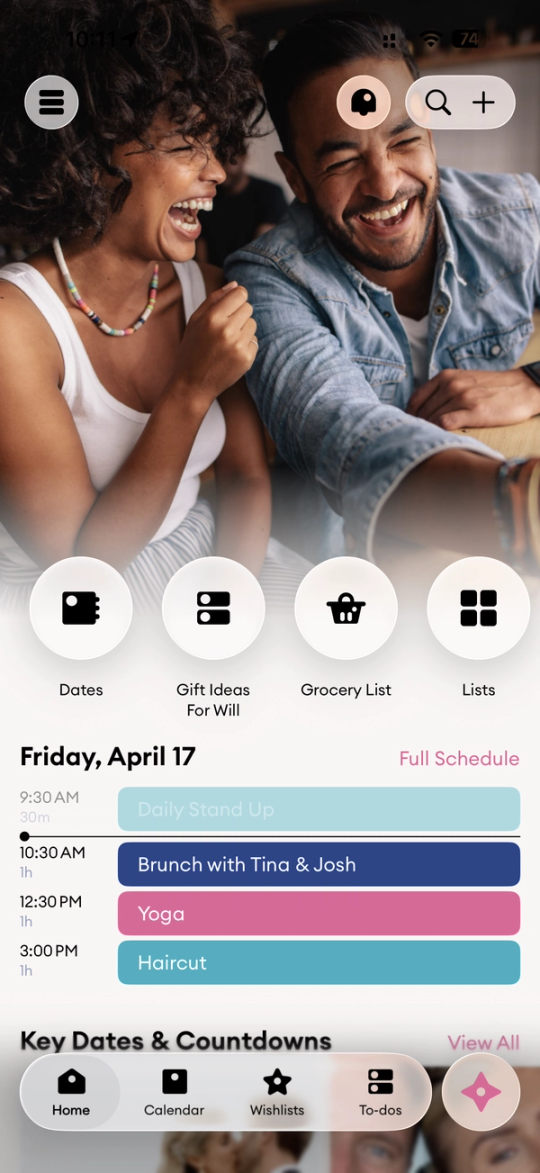
Plan together, stay closer. Share calendars, manage to‑dos, create dreamy wishlists. Let Cupla handle the mental load so you can focus on each other.




70% of users say Cupla reduces stress and friction in their relationship.

Help us plan a date for tonight
Everything you need to do life together
Powerful tools, built specifically for two.
Shared Calendar
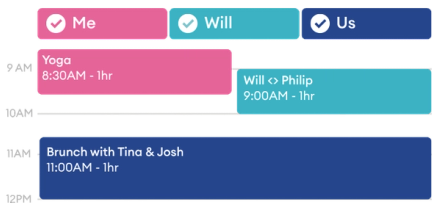
Sync Google, Apple, Outlook and any other calendar on your device into one unified view, see both schedules at a glance.
To-dos & Lists
Shared task lists with priorities, labels and reminders, from groceries to home projects.
Date Planner
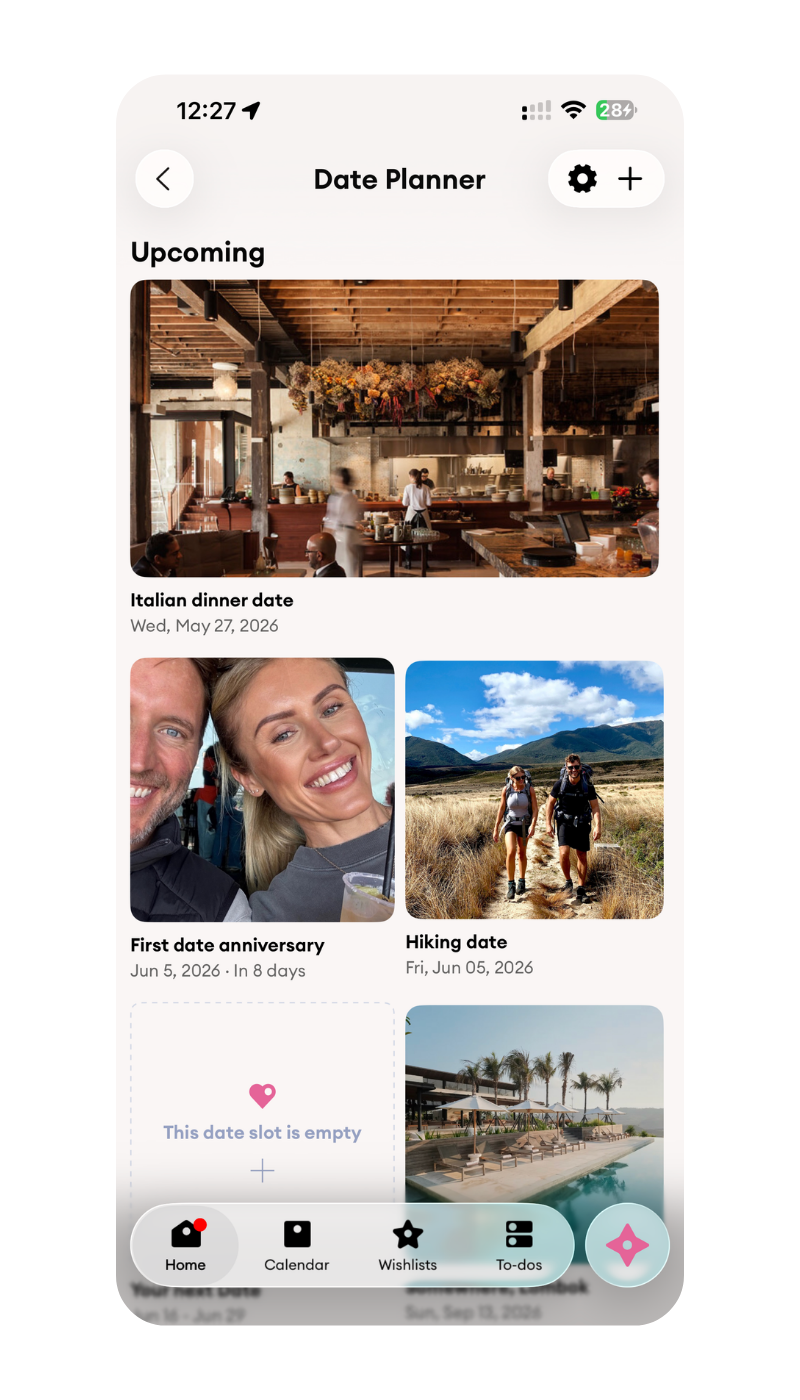
Set a weekly date goal and get reminders, stay intentional about quality time together.
Key Dates & Countdowns
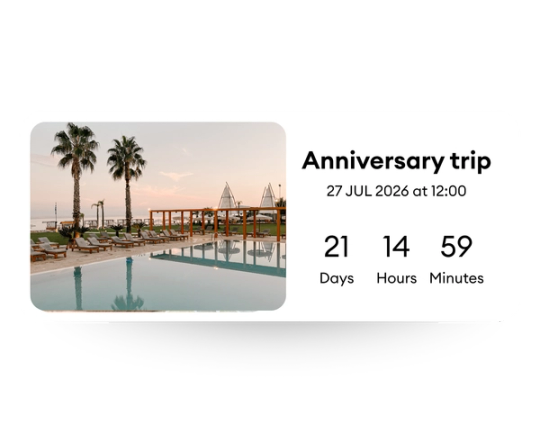
Never miss an anniversary, trip or milestone, track every moment that matters.
Cupla Assist
Ask Cupla to plan a date, suggest ideas or find free time, your relationship co-pilot.
Wishlists
A dedicated space to build up collections of travel, date, gift ideas and more from anywhere.
Built specifically for two.
If you’re a busy couple you know what it’s like to drown in admin — the calendar invites, shared docs, group chats and endless coordination — something always slips through the cracks. Coordinating a relationship and everything that goes with it can start to feel like a job. And it shouldn’t be — your relationship is meant to be about love.
The tools you’re using were built for someone else. Calendars and to-do apps are designed for individuals, and the family organisers assume seven people and a colour for the dog. None of them understand the nuances of being two people sharing one life.
Cupla is different. It was designed by a real couple, for couples, from day one — and every feature reflects the specific way couples actually plan together: the negotiation over Saturday night, the diary disconnect on date night, the mental load of remembering what your partner already told you. It’s not a generic productivity app you’ve adapted for your relationship. It’s the only couples app built from the ground up for two.
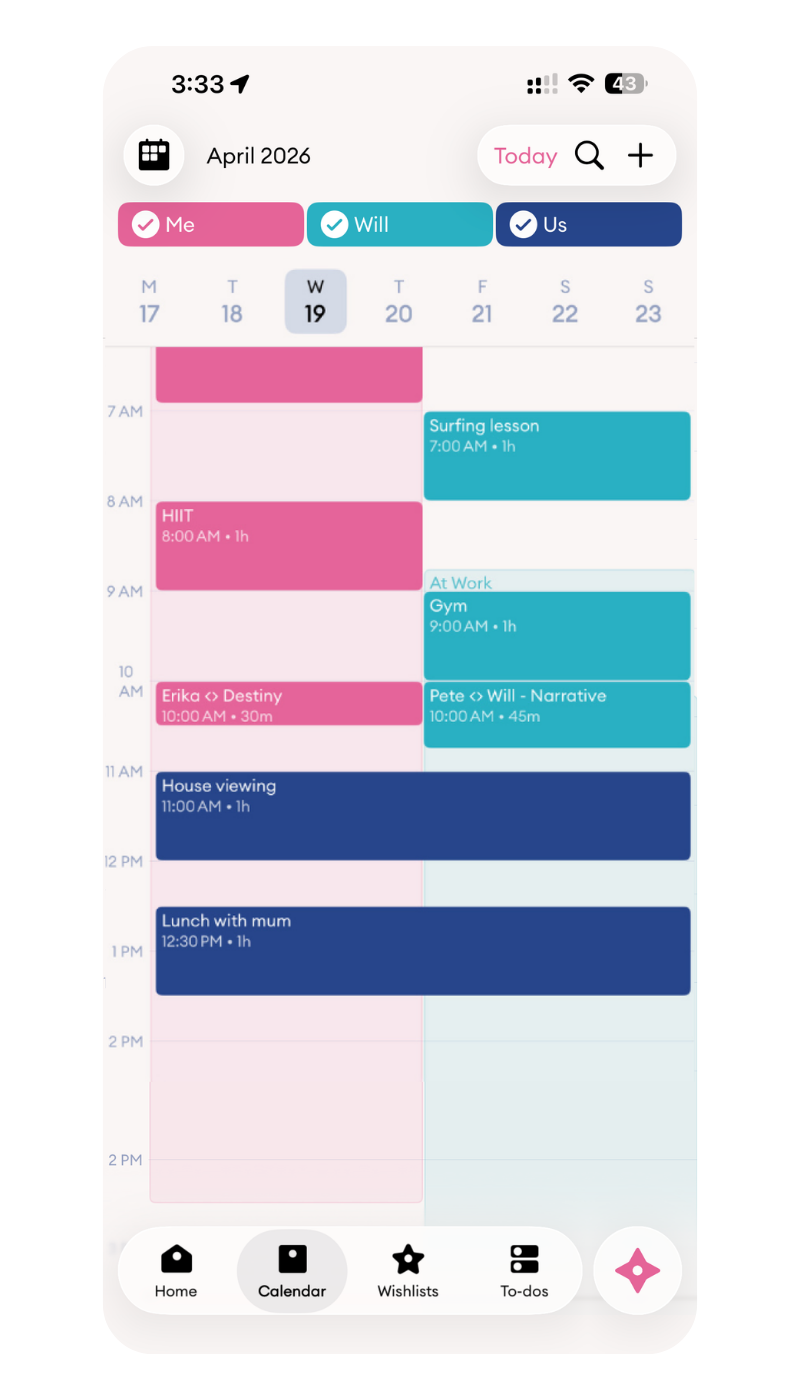
The shared calendar that started it all
Cupla’s shared calendar pulls Google, Apple, Outlook and any other calendar already on your phone into a single colour-coded view. Side-by-side, stacked or monthly — see both your schedules at once, with privacy controls so you share what you want and keep what you don’t.
Over 500 thousand couples trust Cupla
“The calendar gives us a great visualization of our schedules and has helped us so much making sure we have at least one day a week spending time together.”
“The calendar gives us a great visualization of our schedules and has helped us so much making sure we have at least one day a week spending time together.”
“Cupla has significantly improved our relationship. We find ourselves more organized, eager for our next date, and better connected than ever before.”
“Cupla makes it super seamless to find empty spaces in our diaries and book dates all within the app. It's changed how we plan everything.”
“We have such varying schedules and Cupla makes it easy to keep each other updated. It also prompts us to plan a date when we haven't had one in a while.”
“The to-do lists make life easier — we can see what each other have on and love the groceries and reminders. We tell all our friends about it!”
“Cupla has changed EVERYTHING. We can finally plan dates with his crazy schedule and the house is organised so we both feel like we're contributing equally.”